
Clinical case: 3D surgical guides for implants in a digital workflow
Clinical case on 3D surgical guides for implants: CBCT planning, dental 3D printing and digital workflow for practices.
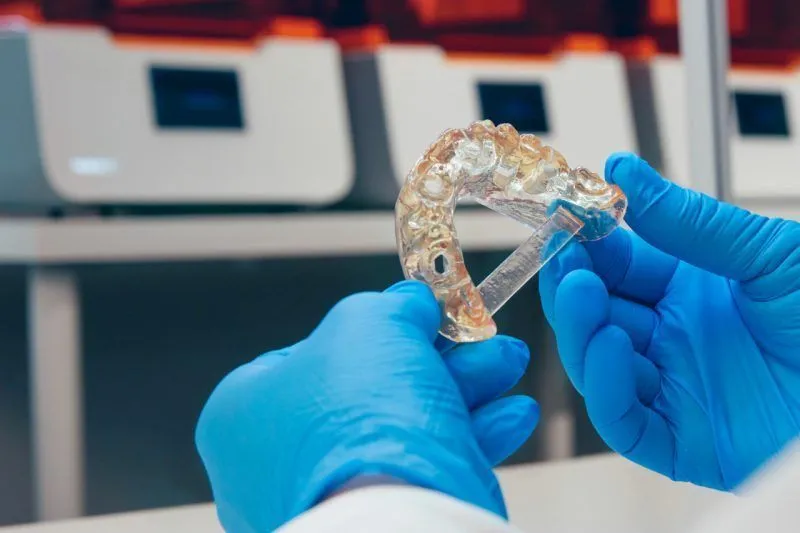
This clinical case shows how 3D surgical guides help transfer CBCT planning into implant surgery with greater control. It also connects guide design with future implant prosthetics, so the practice and laboratory work from the same digital plan.
Using 3D guided surgery for implant placement brings greater precision and comfort for the patient. It is a safer, more predictable, and more efficient way to receive treatment.
Patients also benefit from shorter intervention and recovery times, because surgical guides help make procedures less invasive.
High-precision dental 3D printing to manufacture surgical guides
Formlabs dental 3D printing enables the manufacture of exceptional high-precision parts. This is a leading technology in the dental sector for producing 3D surgical guides for dental implant placement.
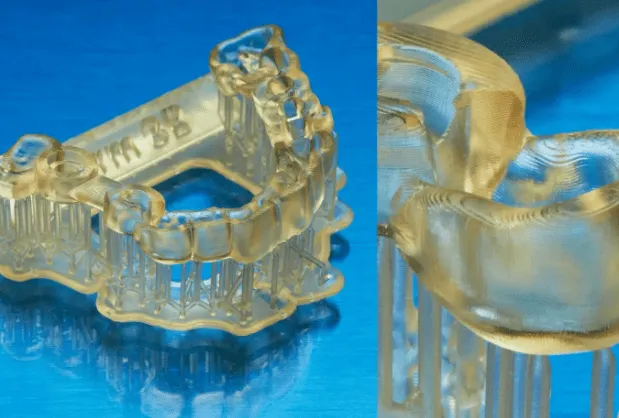
3D guides made with Formlabs resin can be sterilized in an autoclave and are a benchmark in digital dentistry.
We are a 3D dental laboratory and have created a digital protocol that allows dentists to review the design before manufacturing.
3D surgical guide protocol for dental implant placement
What we need:
- ✅ Intraoral scan or impressions
- ✅ CBCT (*)
- ✅ Implant positions and brand.
(*) For edentulous patients, only the Dual CBCT with the complete removable prosthesis is required (request the Dual Scan Protocol); an intraoral scan is not necessary.
Within 24 hours, you can review the planning with an explanatory case video, a complete surgical report, and the drilling protocol.
Once you approve the design, we manufacture it with 3D printers in our digital dental laboratory in Barcelona and send it to you within 48 hours.
We can offer you a digital treatment workflow that lets you plan any implant treatment and design any surgical guide, whether tooth-supported or bone-supported.
Want to know more about 3D surgical guides for dental implant placement?
How do we make surgical guides?
The process for placing implants with guided dental surgery begins with a thorough assessment of the patient’s digital anatomical data.
These 3D patient images are used in dental planning software to virtually position the implant in the exact location.
Surgical guides made with dental 3D printing are one of the latest advances in dental implant technology.
All our surgical guides are designed by a dentist specialized in guided surgery treatment planning with 3Shape Implant Studio software.
Within 24 hours, you can review the treatment plan and, if you approve it, you will receive the guide in 48 h.
Alignment of the scanned files
The images provided by the CBCT scanner are merged with the images provided by the dental intraoral scanner to obtain the complete clinical information.
This step is used to determine the error distribution between the supplied data sets.
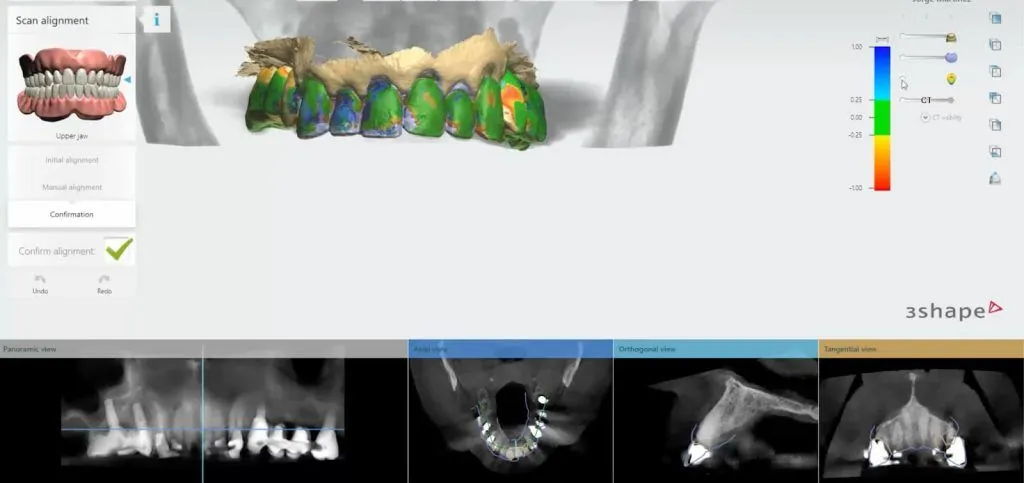
Functionality is improved by considering the clinical situation, gingiva, bone density, and nerve positions.
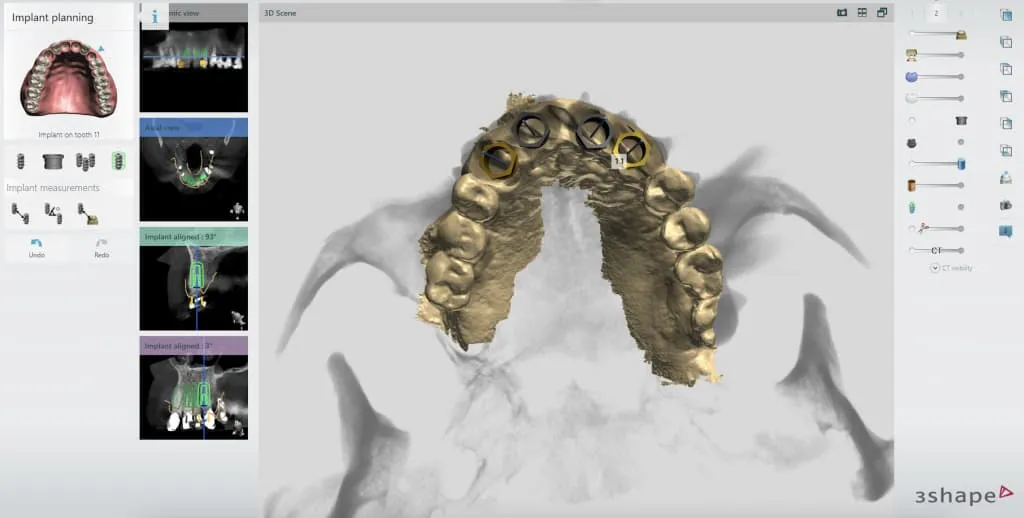
In this guided surgery case, extraction was planned for teeth in positions: 1.3, 1.2, 1.1, 2.1, 2.2, 2.3.
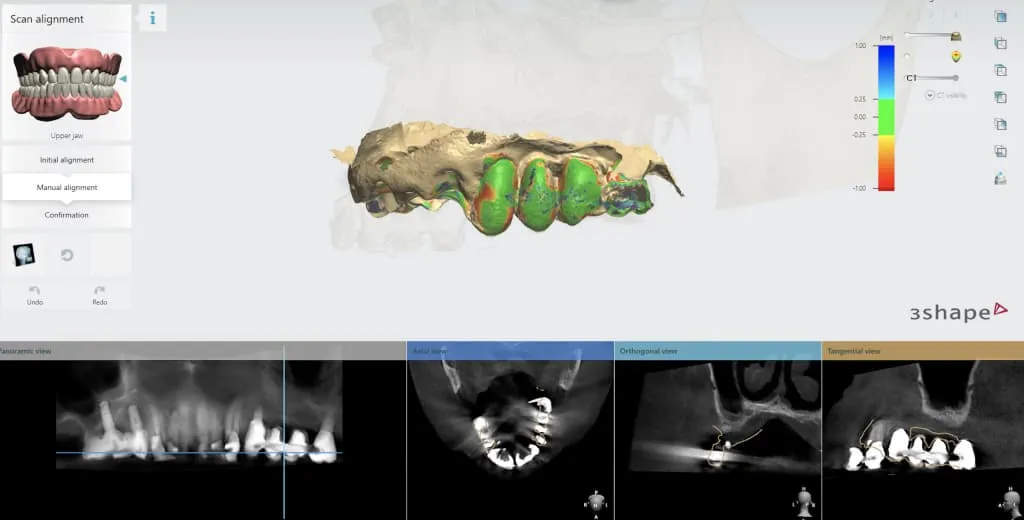
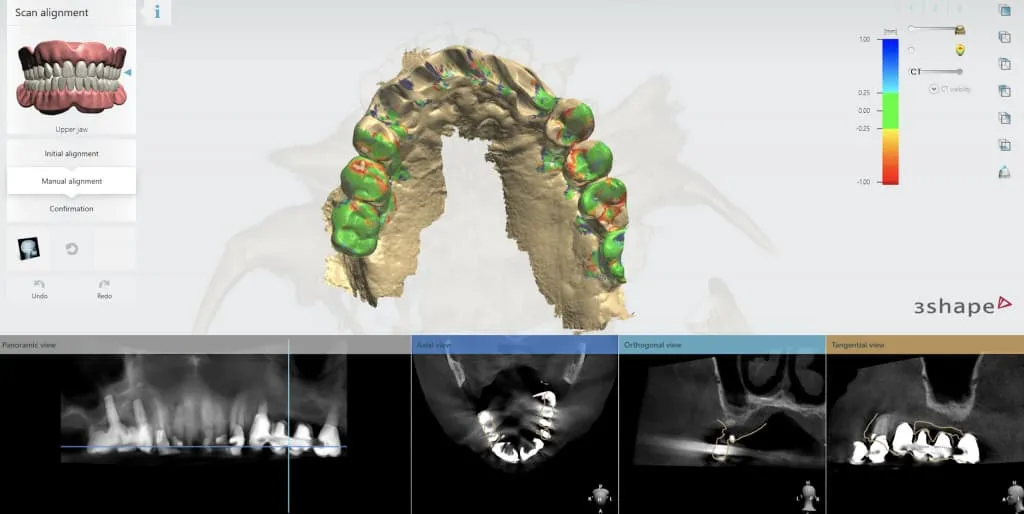
The goal is the green alignment of the CBCT with the intraoral scan. This shows that the scanned data is correct and suitable for creating the surgical guide for dental implants.
This step is very important because the dental surgical guide will be created using the data scanned with the intraoral scanner.
Once the data alignment is confirmed, the implant placement and case planning can begin.
Placing dental implants in the correct positions
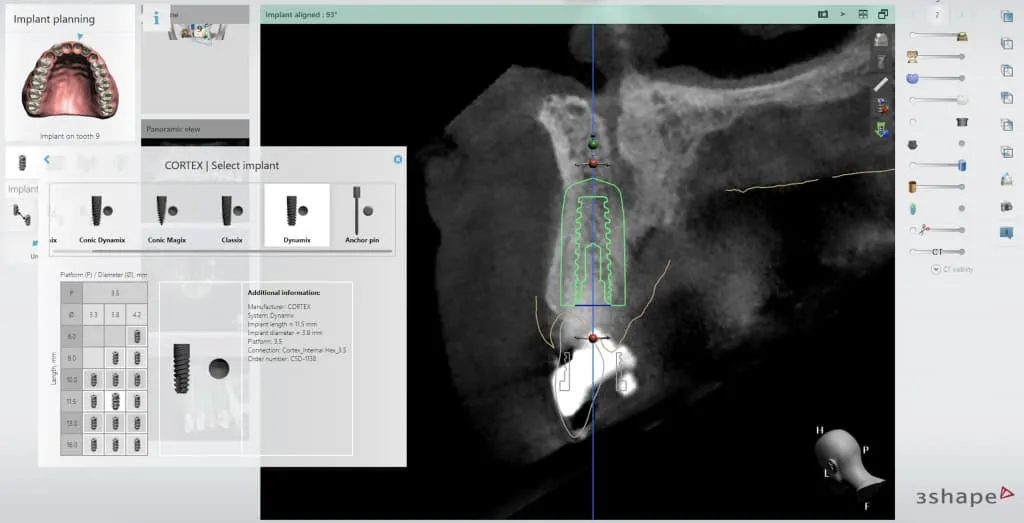
At this stage, the implants and guide type are selected. Several surgical guides are available depending on the surgical technique and dental implant brand:
-
Pilot guide: indicated for use with the pilot drill. This guide helps achieve the correct angulation for the subsequent drills while remaining centered in the cylinder.
-
Full guide: indicated for fully guided surgery. It allows the complete drilling sequence to be followed for dental implant placement.
Depending on the guide type and implant brand, metal sleeves fitted to the guide may be required to direct the surgical drill.
In addition to the video, you can review the control images and check the safety distances both around the dental implant and in the apical area.
The blue line is the longitudinal axis of the implant and is aligned with the virtual crown.
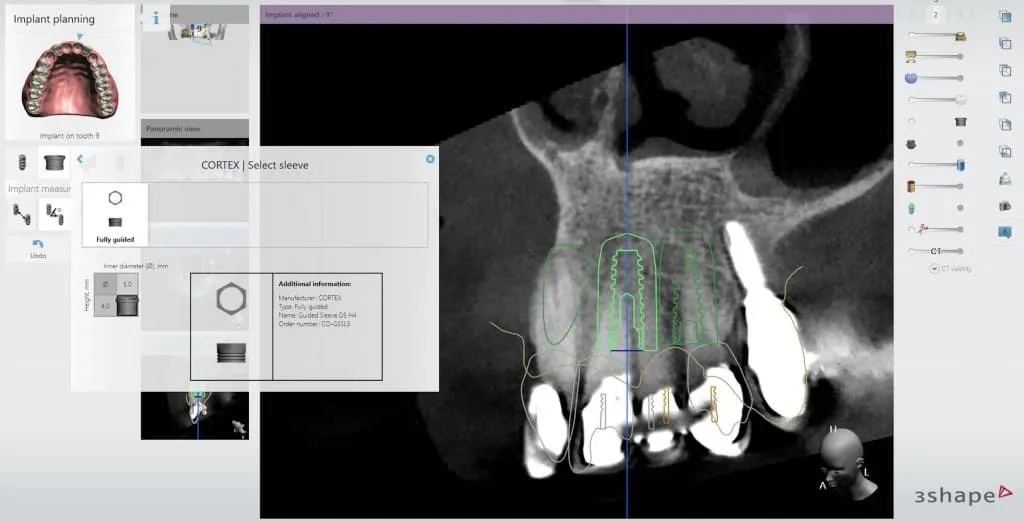
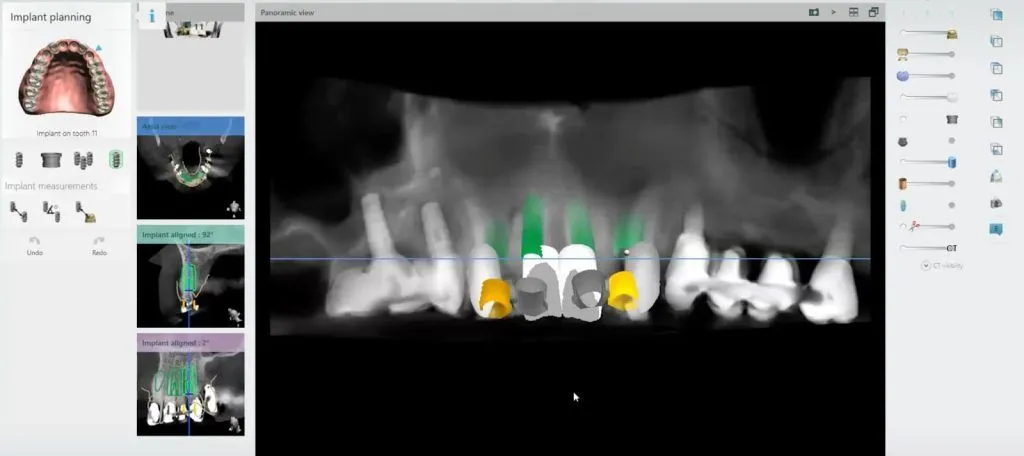
The video explains the areas that will require post-extraction grafts, a flap, or other surgical indications.
3D surgical guide design
Once the alignment phase is complete, the dental surgical guide is designed on the patient’s intraoral scan.
There are different types of 3D surgical guides for dental implant placement:
- Tooth-supported surgical guide
- Tissue-supported surgical guide (mucosa-supported)
- Bone-supported surgical guide
In this case, it is a tooth-supported surgical guide:
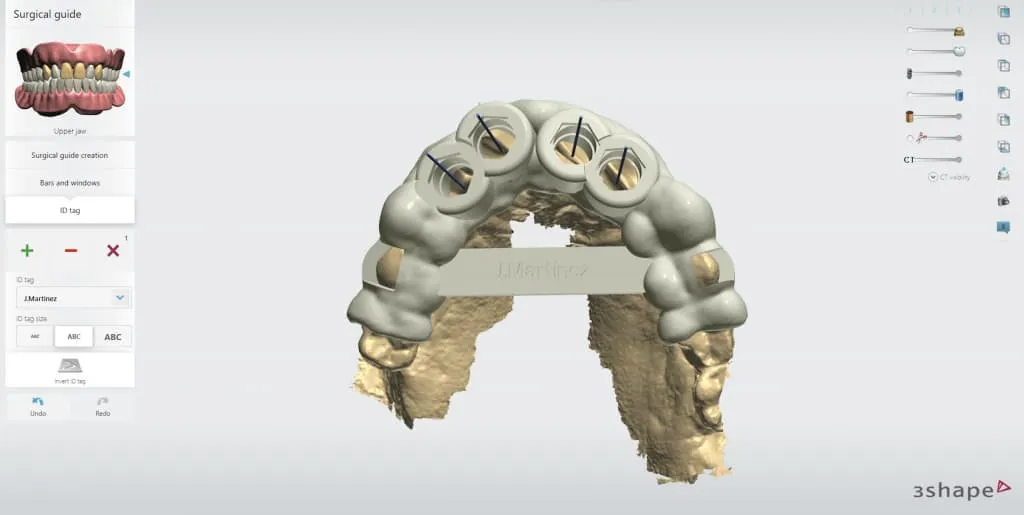
The design then needs to be configured with the optimal parameters for later manufacturing with dental 3D printing.
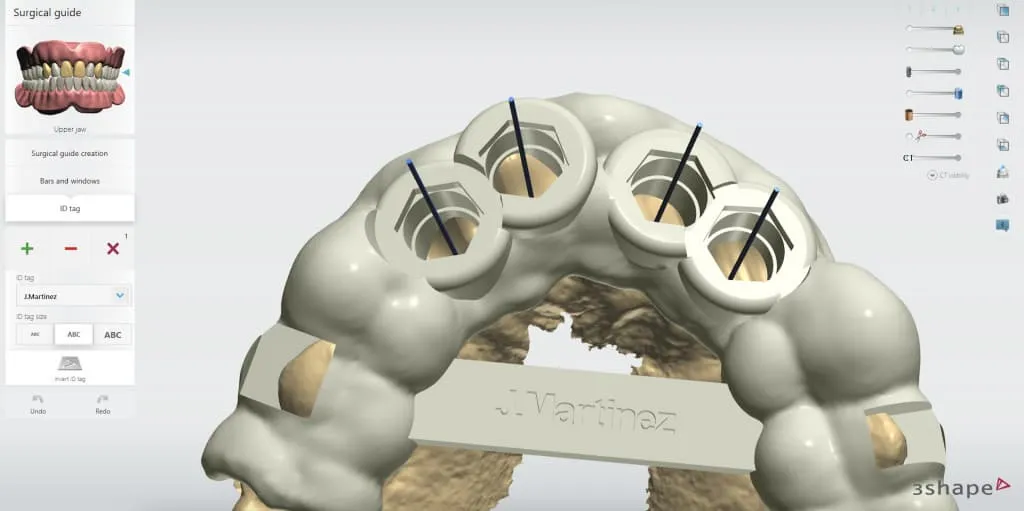
This guide includes two lateral “windows” that help with intraoral placement. It also has a “stability bar” to improve manufacturing with dental 3D printing.
Surgical report and 3D guide parameters
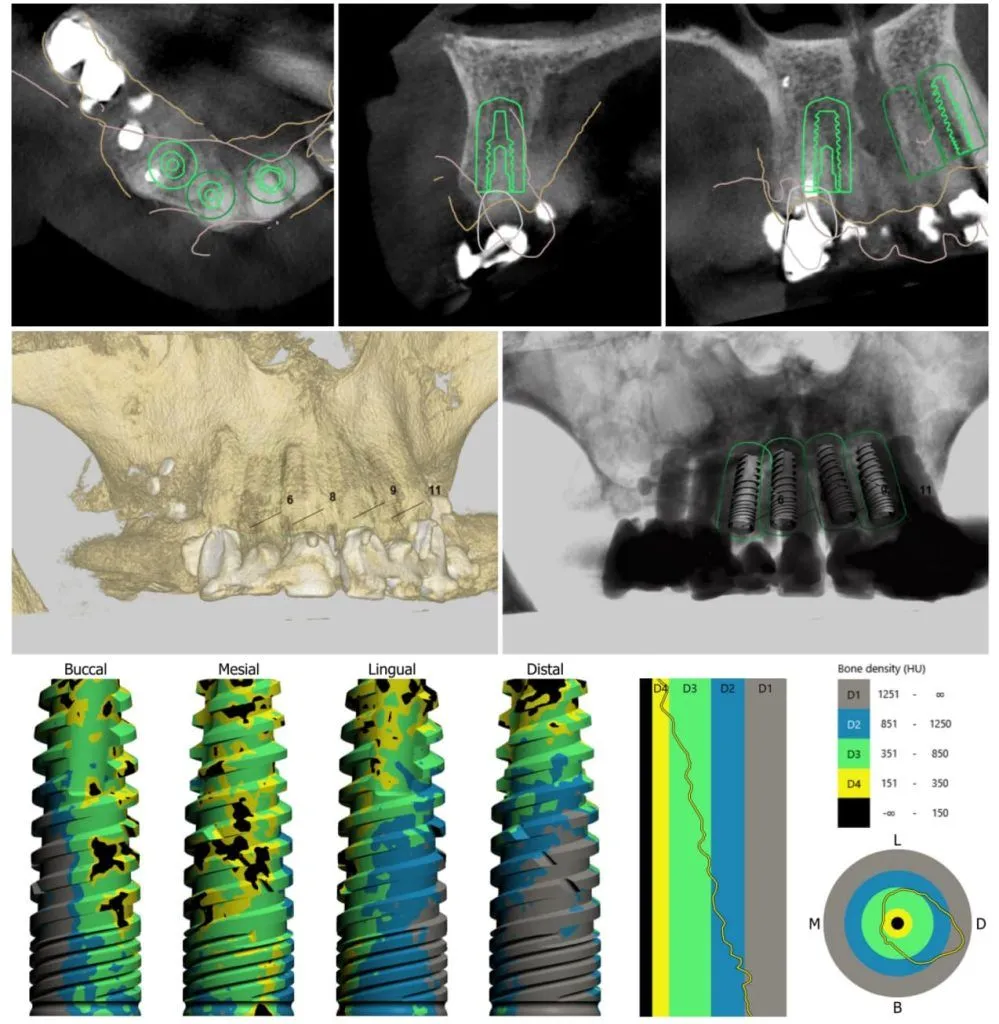
For every guided surgery case for dental implants, a complete surgical report is prepared, explaining in detail:
- Implant information
- Control images with axial, sagittal, and mesiodistal views
- Images with a bone reference map and dental implant.
- Images and comments about grafts and flaps
- Control images showing the distance between implants
In the video, the dentist responsible for the design and planning explains the most important aspects shown in the report.
Precision study on 3D surgical guides
We have already successfully produced more than 15,000 dental parts using dental 3D printing.
We are experts in dental 3D printing for the dental sector with Formlabs technology.
We reliably manufacture high-precision surgical guides that help you ensure accurate implant placement.
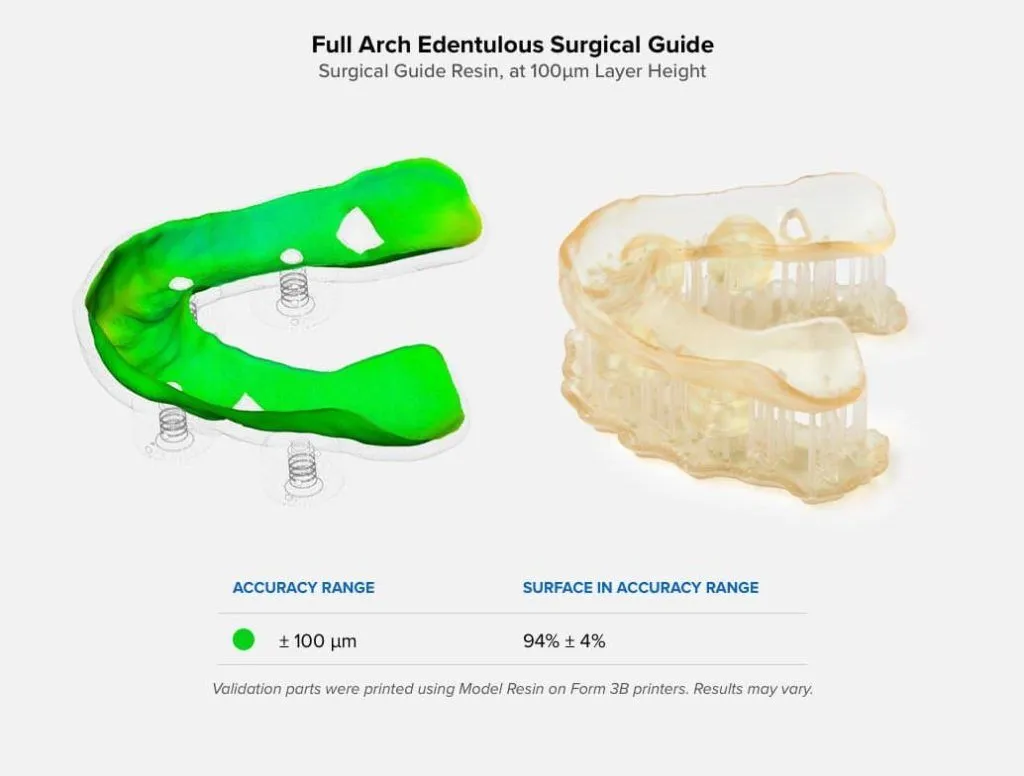
Surgical Guide Resin is a biocompatible, class I, CE-marked resin for applications such as dental 3D printing. This material was developed specifically for Formlabs printers.